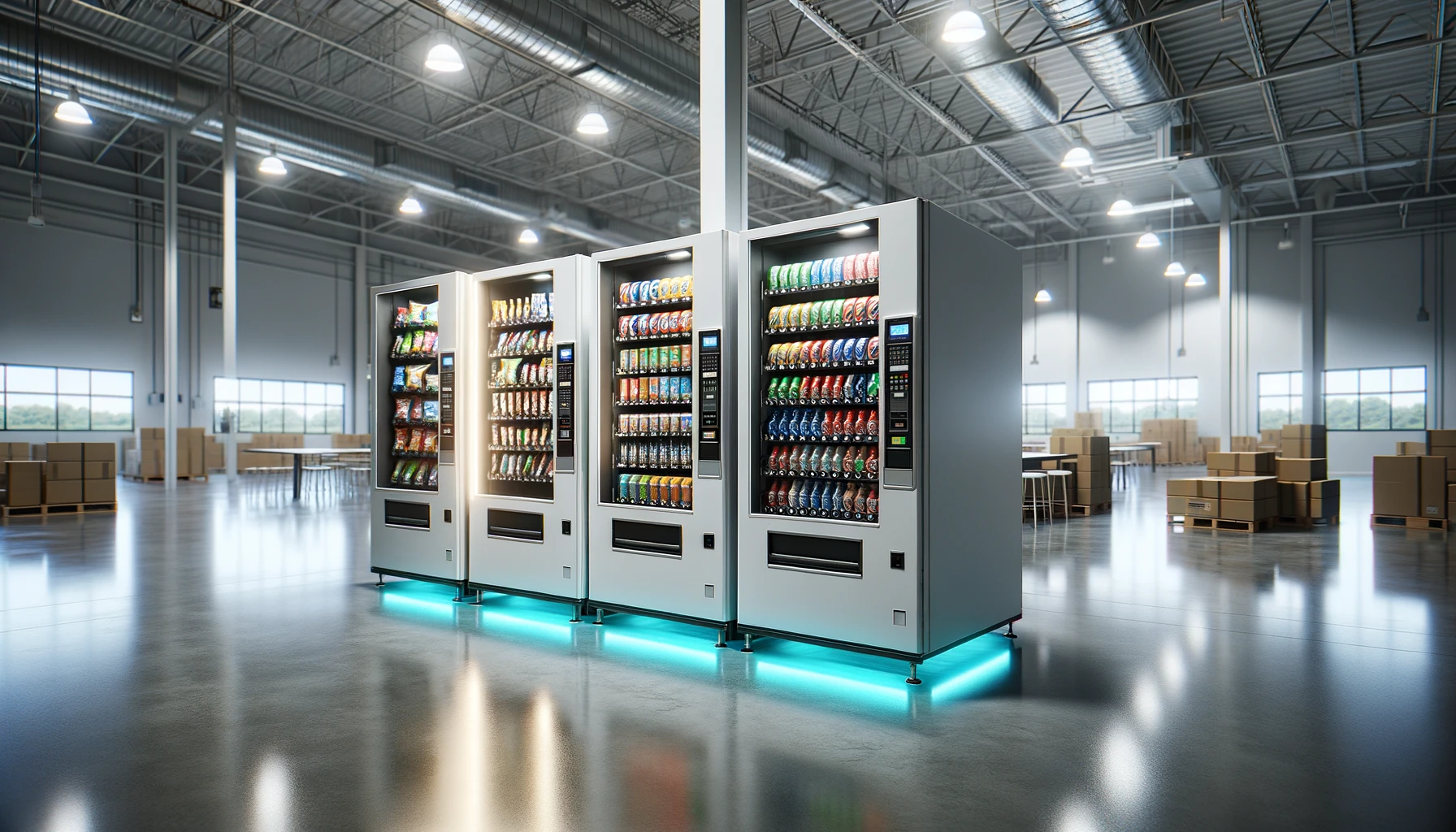
Kenosha used to be known as a lakefront manufacturing city. It still is, but the story has changed. The I-94 corridor that connects the 9.5-million-person Chicago metro to the 1.6-million-person Milwaukee metro passes directly through Kenosha County, and that geography has turned the western part of the city and surrounding areas into a logistics engine. A 200-million-dollar logistics park anchors the corridor, with millions of square feet of distribution and warehouse space built in the last decade. A global fulfillment operation employs over a thousand people in a facility that runs around the clock. One of the largest shipping supply distributors in North America recently opened the biggest warehouse in Wisconsin here — and they're still expanding, adding nearly 1,200 new employees in a single year. Meanwhile, the historic core of Kenosha's economy persists: a major tool manufacturer with over 10,000 employees globally maintains its corporate headquarters downtown, and an apparel company with deep Kenosha roots still operates from the city. The result is a market that mixes corporate headquarters, massive distribution operations, and legacy manufacturing — three fundamentally different vending account types within a single county.
Vending Machine Service in Kenosha
The dominant vending challenge in Kenosha is scale — specifically, the scale of the fulfillment and distribution operations along the I-94 corridor. A single fulfillment center with 1,000 to 1,500 employees running multiple shifts generates consumption volume that exceeds what most vending operators plan for when they think about "suburban Wisconsin." These aren't office parks where machines get used moderately at lunch. These are facilities where hundreds of workers hit break rooms in concentrated windows between shifts, where energy drinks and cold beverages move at three to four times the rate of a typical account, and where machines need to survive the physical demands of a warehouse environment — temperature swings between loading dock areas and climate-controlled zones, dust from packaging operations, and constant foot traffic from workers in steel-toed boots.
The corporate side of Kenosha operates on entirely different expectations. A tool manufacturer's headquarters campus employs professionals who expect their break room to reflect the company's stature. An apparel company's offices need a clean, modern vending presentation that aligns with a brand-conscious culture. These accounts need curated product selection, modern equipment with contactless payment, and a restocking approach that keeps variety fresh — not the volume-first, durability-focused model that works in a distribution center across town.
The mismatch risk in Kenosha is a vendor who services one type well but accepts accounts of both types because they want the route density. A service plan calibrated for corporate headquarters will underserve a fulfillment center on volume and durability. A service plan built for distribution warehouses will underserve a corporate campus on product quality and presentation. When you tell us about your Kenosha facility, we size the service to your actual account type — not a one-size-fits-all template.
Micro-Markets in Kenosha
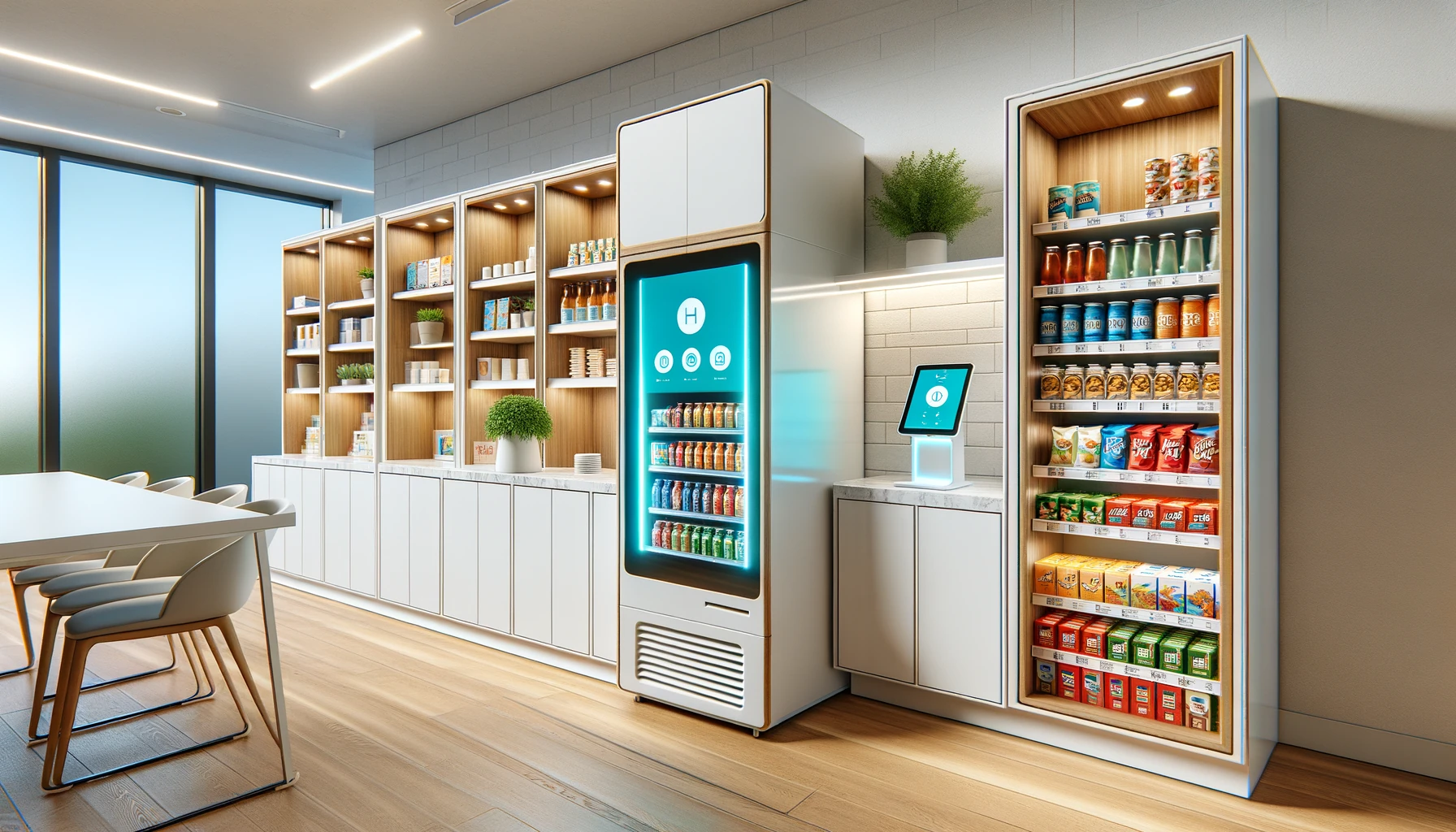
Kenosha's corporate headquarters campuses are natural micro-market accounts. A major tool manufacturer with a professional workforce and dedicated break room infrastructure is exactly the type of facility where a micro-market delivers value that traditional vending machines cannot — fresh food options, curated snack selection, name-brand beverages, and a self-serve experience that employees view as a genuine workplace amenity. A micro-market replaces machines with an open store format: shelving, a glass-front cooler, and a self-checkout kiosk. Employees grab what they want and pay. No glass to squint through, no coin mechanisms, no product limitations imposed by spiral slots.
The distribution and fulfillment side is more nuanced. Large warehouses have the headcount for micro-markets — easily 100 or more employees per shift — but the break room logistics are different. Workers have short, concentrated break windows. They need speed above all. A micro-market can deliver that speed if the layout is optimized for throughput: single-file cooler access, pre-packaged grab items at eye level, and a kiosk that processes payments in seconds. Designed like a corporate break room — browsing-friendly, spread out, multiple checkout points — the same setup creates a bottleneck during the fifteen-minute break window that makes the whole installation worse than machines. Distribution facility break room dynamics are not the same as office campus dynamics, and we design the layout accordingly.
If your Kenosha facility has 100 or more employees and break room space, a micro-market is worth evaluating. Tell us about your operation and we'll assess which format — traditional vending, micro-market, or a combination — fits your specific facility type and break room traffic patterns.
What Makes Our Service Different in Kenosha
Kenosha exists in a vending no-man's-land. Milwaukee-based operators consider it the southern edge of their territory — reachable but not core. Chicago-area operators might glance across the border but generally don't invest in Wisconsin route infrastructure. The result is that Kenosha has some of the strongest individual accounts in the region and some of the thinnest operator coverage. A fulfillment center that would have five vendors competing for it in a Milwaukee suburb gets maybe two serious proposals in Kenosha — and one of them is from a vendor who doesn't have consistent route presence south of Racine.
We run reliable routes across Kenosha County on a fixed schedule. The I-94 corridor isn't a stretch from our hub — it's a planned territory with restock cadence sized to the consumption volume of fulfillment centers and corporate campuses alike. Restock frequency is set by consumption per machine, not by what's convenient for the driver. Equipment is rated for the environment. Service errors get handled the same week they're reported — not on the next pass through the area three weeks later.
Product mix gets tuned to your account type. A fulfillment center break room runs heavy on energy drinks, cold beverages, and filling food. A corporate headquarters runs lighter — premium snacks, specialty beverages, fresh options. The service plan reflects who actually uses your break room, not a generic stock list applied across every account in the county.
Service Types in Kenosha
Distribution & Fulfillment Center Vending
For large-scale warehouse and fulfillment operations along the I-94 corridor. High-capacity machines, energy drinks and cold beverages at volume, filling snack and meal options, durable equipment for warehouse environments, and a restocking cadence matched to 24/7 shift consumption. Kenosha's dominant account type — and the one most operators underestimate.
Corporate Headquarters Micro-Markets
For professional campuses and corporate offices with 200+ employees. Fresh food, curated product selection, modern kiosk checkout, and a break room experience that reflects the company's brand standards. Micro-market format strongly recommended for headquarters accounts at this headcount.
Manufacturing & Industrial Vending
For production facilities, machining operations, and industrial plants. Shift-worker consumption patterns, limited off-site food access, and equipment that handles the demands of a factory floor environment. Product mix focused on energy, hydration, and filling meals — not office snacks.
Logistics Park & Business Park Vending
For multi-tenant industrial parks and logistics clusters along the I-94 corridor. Often a mix of small to mid-size tenants sharing common break areas. Product mix needs to serve a broad workforce — from warehouse staff to office personnel in the same building.
Frequently Asked Questions — Vending in Kenosha
We run a fulfillment center with 1,000+ employees on rotating shifts — can you keep up?
Yes — with a service plan built around your volume. Your facility will generate consumption that exceeds what most vendors plan for at their largest accounts. We size the service to your account: industrial-distribution restocking cadence (multiple times per week, daily for high-traffic areas), inventory depth staged to handle shift-change spikes, and equipment rated for warehouse environments. Restocking frequency and capacity are part of the service plan from day one, not adjusted after the first complaint.
We're a corporate headquarters — will service quality match what we'd get from a Milwaukee operator?
Service quality depends on the service plan, not the geography. We run reliable routes through Kenosha County on a fixed schedule — including the corporate corridor downtown. The risk in Kenosha is being serviced by a vendor whose strength is warehouses when your account needs a corporate campus approach. We size product mix, equipment quality, and restocking cadence to your account type — a corporate HQ gets a different service plan than a fulfillment center two miles away.
Our warehouse is in one of the new logistics parks west of I-94 — do you cover that area?
Yes. The I-94 corridor logistics parks are some of the newest commercial real estate in the county, and we run our routes through them on a fixed schedule. Some operators haven't extended consistent coverage west of I-94 yet; we have. Tell us your specific location and we'll confirm the route schedule for your address.
Does it cost us anything to get vending machines or a micro-market installed?
For qualifying locations with 50 or more employees, vending service is provided at no direct cost — we earn through product sales. Micro-markets work the same way for locations with 100 or more employees. For Kenosha's large distribution and fulfillment accounts, the per-machine revenue easily justifies the equipment investment. You provide space and power; we handle the rest.
We also have facilities in Racine and Milwaukee — can you service all locations?
Yes. We serve Racine, Milwaukee, and 14 other cities across southeast Wisconsin. For multi-location accounts spanning the I-94 corridor, we run all sites on the same route discipline so service quality stays consistent across buildings. See all cities we cover →
Why VendingMilwaukee for Kenosha
Kenosha is growing faster than any vending market in southeast Wisconsin. The I-94 corridor is adding distribution, fulfillment, and logistics operations at a pace that's outstripping vendor capacity — which means facilities that should get a properly sized service plan are settling for whoever picks up the phone. That works until it doesn't, and for a fulfillment center running three shifts with a thousand employees, "doesn't work" means empty machines, stale product, and service calls that take days instead of hours.
We run reliable routes through Kenosha County on a fixed schedule. Restock cadence is sized to consumption per machine, equipment is matched to the environment, and service errors get handled fast. For a market growing this fast, with this much variation between account types, getting the service plan right upfront saves months of frustration.
No direct cost. No obligation. No long-term contracts. Fill out the form or reach out directly and we'll be in touch as soon as we have a real answer for your location.
Email us directly: office@vendingmilwaukee.com · Contact page →